
Warehouse Floor Care Montgomery AL
Engineered high-solids polymer defense, concrete dustproofing, and deep industrial stripping built specifically for 10,000-pound forklift rolling loads.
High shear-resistant polymer cross-linking.
Eliminates concrete chalking and silica dusting.
Resists hydraulic fluid, motor oils, and tire burns.
Black rubber dust and gouged tile are the first physical indicators that your facility’s floor finish has structurally failed. When a fully loaded forklift pivots on a bare VCT floor, the intense shear stress transfers directly to the tile's underlying adhesive layer. Over time, the constant torque from heavy pallet jack abrasion and solid rubber tires rips the tiles straight off the concrete subfloor. In high-volume industrial facilities, you aren't just losing the aesthetic shine; you are actively destroying the structural integrity of your substrate and creating immediate safety hazards for material handling equipment.
Warehouse floor care Montgomery AL requires aggressive, heavy-duty mechanical interventions. Montgomery Floor Strip and Wax executes high-performance coating and extraction protocols for the massive distribution centers operating along Highway 31 South and the Catoma industrial sector. We understand the physical abuse these floors endure daily. We strip out embedded hydraulic fluids, eliminate concrete dusting, and rebuild hardened polymer wear layers engineered specifically to handle 10,000-pound rolling loads without fracturing.
10,000-lb Rolling Shear
Pivoting forklift steer-tires generate massive rotational friction that tears mastic adhesives. High-solids zinc cross-linking forms an impact buffer protecting your underlying tiles.
The Mechanics of Heavy Pallet Jack Abrasion & Forklift Wear
Standard retail-grade floor waxes vaporize under industrial conditions. A grocery store might see heavy foot traffic, but an automotive supply warehouse positioned on the Hyundai Motor Manufacturing Alabama (HMMA) supply routes experiences constant, localized friction from hard-wheeled pallet jacks and forklift masts.
When routine industrial floor stripping and waxing is ignored, ambient dirt and silica dust act like aggressive sandpaper trapped between the rolling wheels and the floor. This mechanical friction grinds the protective finish down to the bare tile or concrete slab. Once the sacrificial wear layer is gone, hydraulic fluids, battery acid spills, and machine grease penetrate the porous substrate. For VCT, this chemical intrusion dissolves the mastic adhesive beneath the tile. For raw concrete, it causes deep oil staining and surface spalling that cannot be washed away with a standard ride-on auto-scrubber.
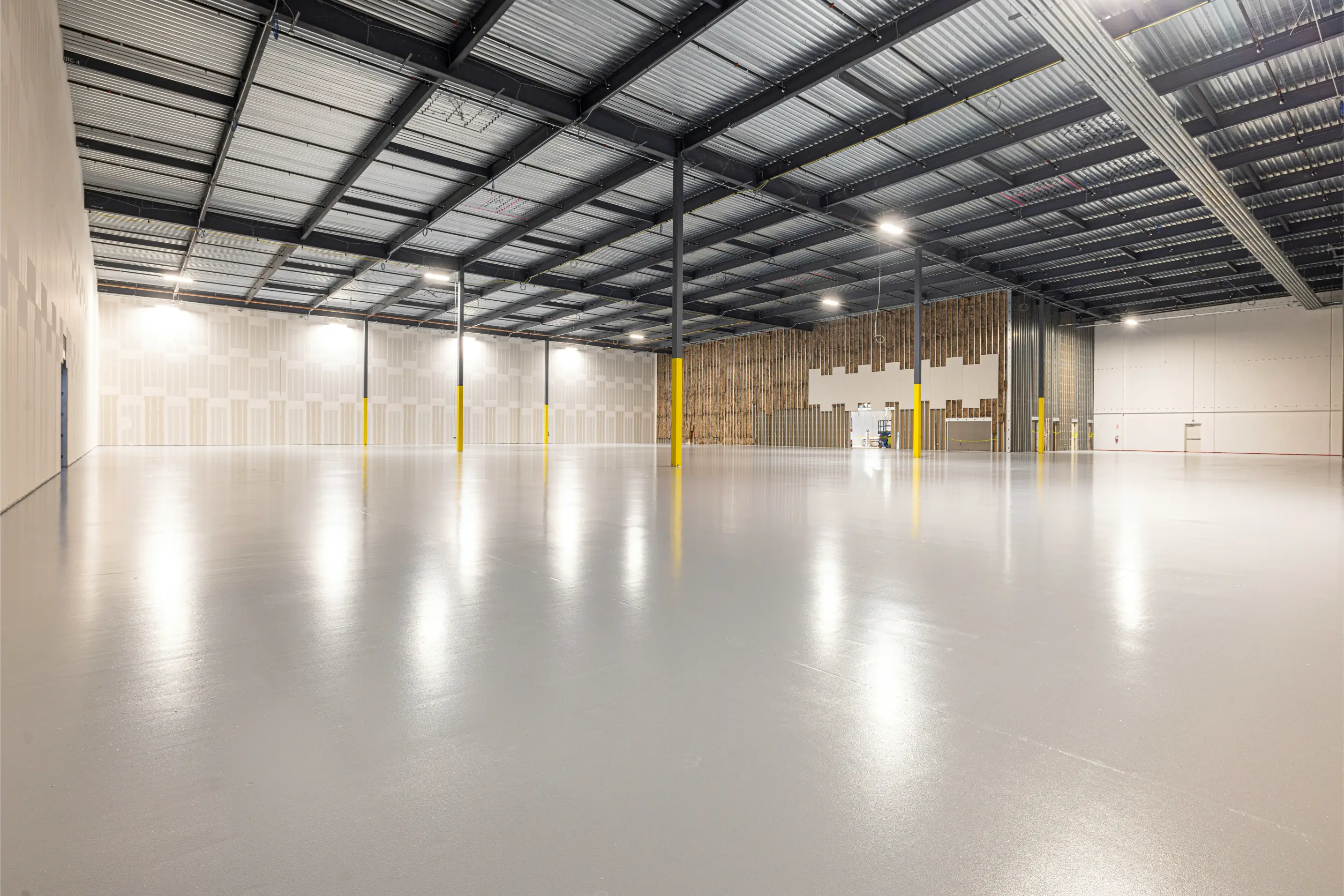
To prevent this catastrophic material failure, high traffic commercial floor sealing requires specialized chemistry. We do not deploy standard 15% or 18% solids acrylics for warehouses. We utilize 20-25% ultra-high-solids zinc-crosslinked polymers. These denser finishes build a thicker, vastly harder barrier that absorbs the brutal friction of the forklifts, keeping the actual flooring material completely untouched. When the wear layer inevitably gets scratched or scuffed, we simply scrub and top-coat the finish, rather than tearing out and replacing the floor.
Concrete and VCT Warehouse Floor Care Protocols
A massive distribution center typically features a mix of flooring types. The main shipping and receiving bays are often raw or sealed concrete, while the breakrooms, staging offices, and pedestrian corridors are laid with traditional VCT. Treating both zones with the same chemical process guarantees failure.
Concrete Dustproofing and Degreasing
Untreated concrete floors in the Montgomery Industrial Park are notorious for "dusting." As heavy forklifts drive over unsealed slabs, the mechanical abrasion breaks down the weak concrete surface at a microscopic level, launching fine silica dust into the air. This dust settles on inventory, destroys the bearings on conveyor belts, and fouls up commercial HVAC filters.
Our concrete and vct warehouse floor care stops dusting at the source. First, we run heavy-duty ride-on scrubbers utilizing aggressive alkaline degreasing agents to pull embedded oil and carbonized tire marks out of the slab. Once the concrete is chemically neutralized and dried, we apply penetrating densifiers or heavy-duty acrylic concrete sealers. These chemical agents sink deeply into the capillary pores of the slab and crystallize, permanently locking the surface and creating a dust-proof, liquid-resistant barrier.
Industrial Floor Stripping and Waxing for VCT
VCT in an industrial setting requires absolute brute force to strip properly. Over the years, factory managers often attempt to hide dirt by instructing the night crew to mop a new layer of wax directly over the old, contaminated finish. This creates a thick, yellowed, dirt-filled crust that resists standard stripping chemicals.
To break this down, we apply hyper-aggressive, high-alkaline stripping solvents. We let the solvent dwell significantly longer than we would in a standard commercial setting, allowing the chemistry to eat through 15 to 20 layers of accumulated, hardened polymer.
Our Industrial Extraction and Coating Workflow
Operating in multi-thousand square-foot distribution facilities means our workflows must be ruthlessly efficient. We systematically section off the warehouse, control the chemical spread, and utilize heavy machinery to execute the job without halting your entire logistical operation.
Step 1: Heavy Particulate Sweeping and Masking
Before a single drop of liquid hits the floor, we deploy industrial dry-sweepers to remove pallet splinters, shrink wrap fragments, and heavy dirt. Moisture-resistant tape and protective barriers are applied to rack legs, safety barriers, and ground-level floor scales to prevent the highly alkaline stripping slurry from causing rust or corrosion on your structural metal assets.
Step 2: High-Volume Chemical Emulsification
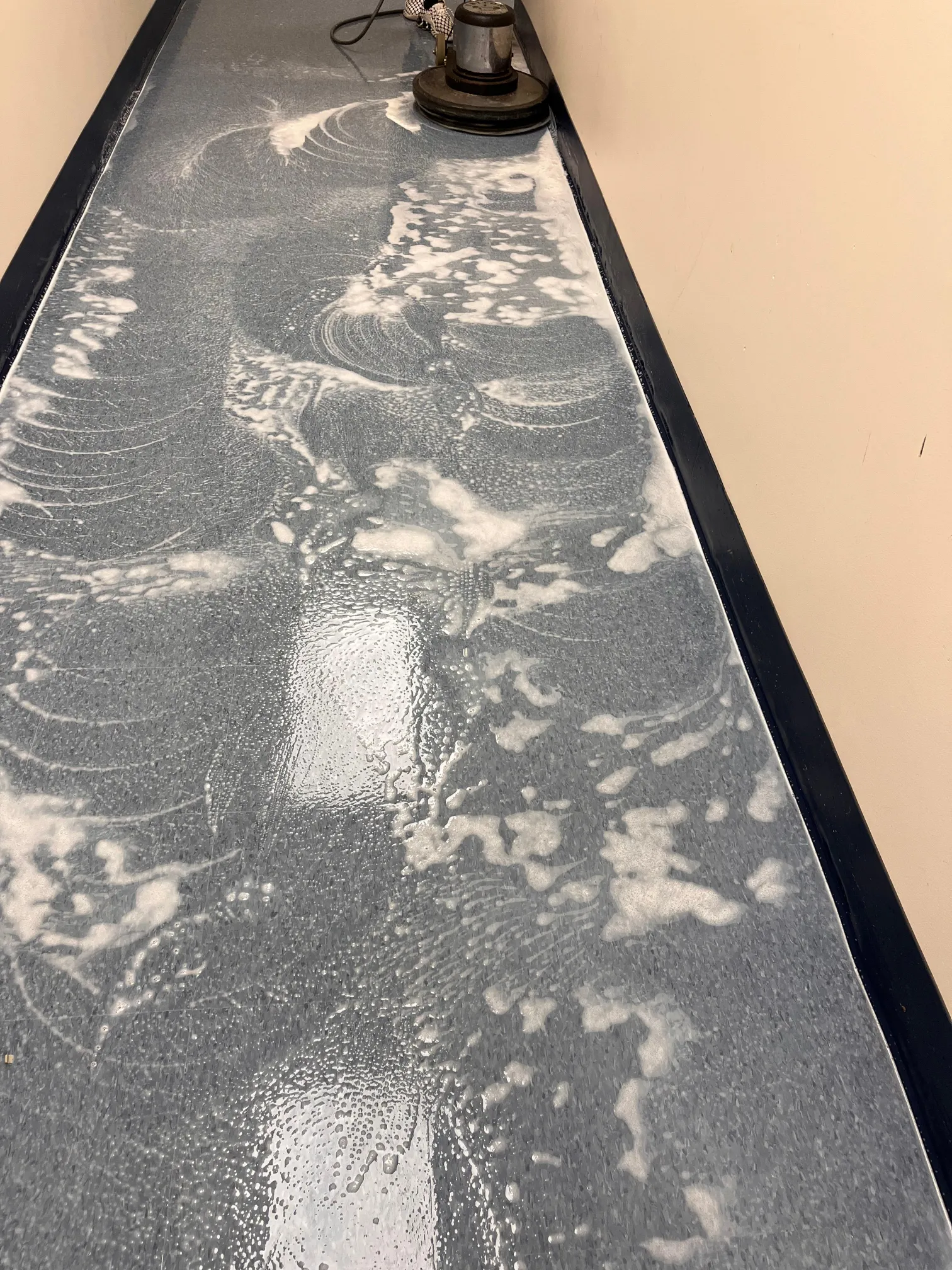
We flood the designated grid with our industrial-strength stripper. Because warehouse floors are often sloped toward drains or slightly unlevel, our technicians manually push the stripping solution back into the high spots to ensure an even chemical dwell time. We monitor the reaction closely. The stripper must completely liquefy the hardened acrylic and embedded grease without flashing off and drying out.
Step 3: Aggressive Mechanical Agitation
We bring in heavy, propane-powered stripping machines and heavy-weighted swing buffers equipped with aggressive black stripping pads. The sheer downward pressure and high RPM of these machines rip the emulsified slurry out of the deep scratches and gouges in the floor. For deep forklift tire burns, we focus targeted manual agitation on the localized damage to pull the carbonized rubber out of the tile.
Step 4: High-CFM Slurry Extraction and Neutralization
The resulting toxic slurry is thick, slippery, and heavy. We extract it rapidly using specialized wet vacuums and high-capacity auto-scrubbers. Immediately after extraction, the bare floor is flooded with a concentrated acidic neutralizer. If an industrial floor is left in an alkaline state, the subsequent layers of wax will immediately powder and fail under the weight of a forklift. We test the surface to confirm a dead neutral pH of 7.0 before proceeding to the coating phase.
Step 5: Density Building and Polymer Cross-linking
We lay down a minimum of five coats of ultra-high-solids industrial finish. In massive open warehouses, we utilize specialized weighted applicator bars that allow us to lay down heavy, even coats across vast square footage rapidly. The massive ambient airflow in large distribution centers is leveraged to flash-dry each coat quickly. This process creates a dense, impenetrable shield that highly resists scuffing and black marks from material handling equipment.
Maintaining Distribution Center Operations
A proper distribution center floor maintenance plan must account for 24-hour logistical cycles. We do not demand that you shut down your entire facility. Our crews isolate specific zones, reroute your forklift traffic through temporary safety corridors, and work systematically from the back of the warehouse to the loading docks.
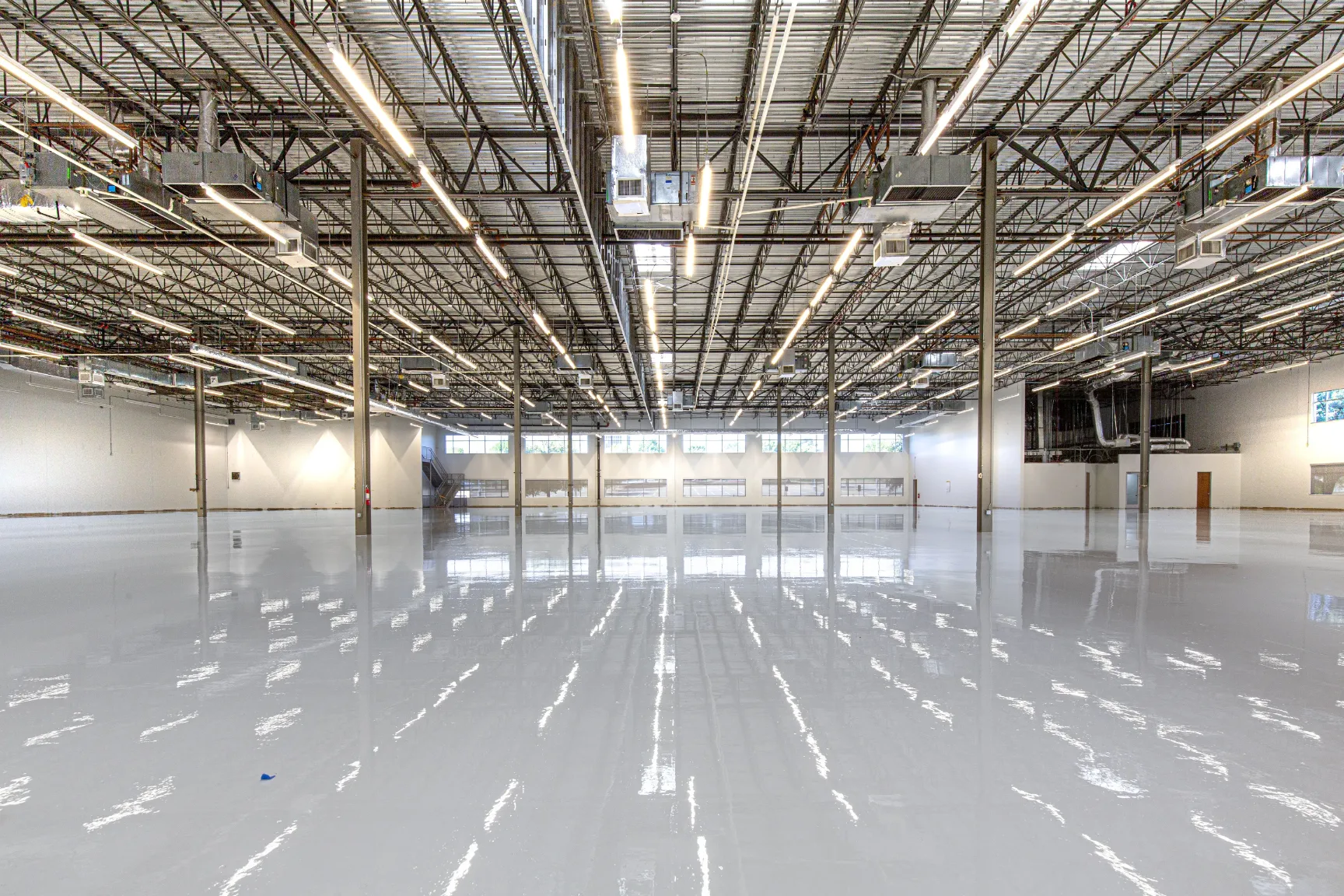
By executing the stripping and waxing process in strategic grids, we ensure your inbound freight and outbound shipping schedules remain fully operational. We calculate the exact dry times of our high-solids polymers based on the ambient humidity inside your warehouse, guaranteeing that the finish is fully hardened and ready for heavy rolling loads the second we pull the caution tape down.
Consistent, high-quality floor maintenance reduces worker fatigue, protects your concrete slab from deep chemical degradation, and keeps the bright safety lines and pedestrian walkways highly visible, actively preventing OSHA violations and workplace accidents.
Schedule an Industrial Site Audit
Stop pouring cheap wax over embedded forklift grease. If your VCT is lifting, or your concrete slab is actively dusting and contaminating your inventory, you need a specialized industrial extraction protocol.
Montgomery Floor Strip and Wax is fully equipped to handle the demands of multi-thousand square-foot distribution facilities. We will assess your substrate, evaluate the chemical and mechanical damage, and build a localized maintenance schedule that keeps your floor structurally sound and completely protected from heavy material handling equipment.
Call (334) 530-5637 to book an industrial site audit today, or utilize our online form capture to submit the exact square footage and operational hours of your facility for a direct technical consultation.
Direct Industrial Consultation
Speak with our heavy facility logistics and chemical stripping lead.
Warehouse Site Audit Proposal
Enter your warehouse square footage, slab type, and operating hours for a localized industrial extraction proposal.