
Commercial Floor Care Wetumpka AL
Red Alabama clay and coarse silica sand tracked in from the US-231 commercial artery act like a low-grit grinding wheel against your commercial flooring. When a customer walks into a Wetumpka facility with abrasive soil on their boots, that grit instantly embeds into soft, poorly cured floor finish. Every subsequent footstep shears that trapped sand against the underlying vinyl composition tile (VCT). Within weeks, the protective wear layer fractures, allowing dirty water, motor oil, and acidic spills to penetrate directly into the porous physical substrate. Standard janitorial crews attempting to fix this by mopping a new layer of cheap wax directly over the contaminated floor only seal the dirt in permanently, creating a thick, yellowed crust that guarantees complete structural failure of the tile.
To stop this catastrophic material degradation, commercial floor care wetumpka al requires aggressive mechanical extraction. Montgomery Floor Strip and Wax does not deploy string mops and heavily diluted daily cleaners to hide substrate damage. We operate heavy-duty rotary scrubbers, utilize precise chemical emulsifiers, and lay down ultra-high-solids zinc-crosslinked polymers engineered specifically to survive the heavy foot traffic of Elmore County municipal complexes, civic facilities, and active retail strips. We strip your floors down to the bare manufactured tile, pull years of alkaline burn out of the pores, and build a diamond-hard wear layer that violently rejects scuffs and moisture intrusion.
Elmore County Facility Specs
- Red clay & coarse silica abrasive extraction
- Exact pH 7.0 acidic substrate neutralization
- 2000+ RPM thermal curing for diamond-hard wear layer
- Overnight scheduling tailored for municipal & retail sectors
Diagnosing Substrate Damage Along the US-231 Corridor
The commercial footprint in Wetumpka demands localized, highly technical VCT maintenance. Standard floor wax fails rapidly here because contractors ignore the ambient environmental conditions and the localized soil types.
In the heavily trafficked local banking branches and busy Wetumpka retail strips, the most common point of failure we identify during a substrate assessment is severe acrylic delamination. This occurs when an inexperienced maintenance crew applies a thick layer of floor finish over a tile surface that has not been properly neutralized. Floor strippers are highly caustic chemicals, often registering a pH of 13 or 14. If that alkaline residue is not scrubbed out of the floor prior to sealing, the new wax will not physically bond to the tile. Instead, it dries into a brittle, unstable shell that instantly peels up in massive flakes the moment a heavy pallet jack or rolling safe rolls across it.
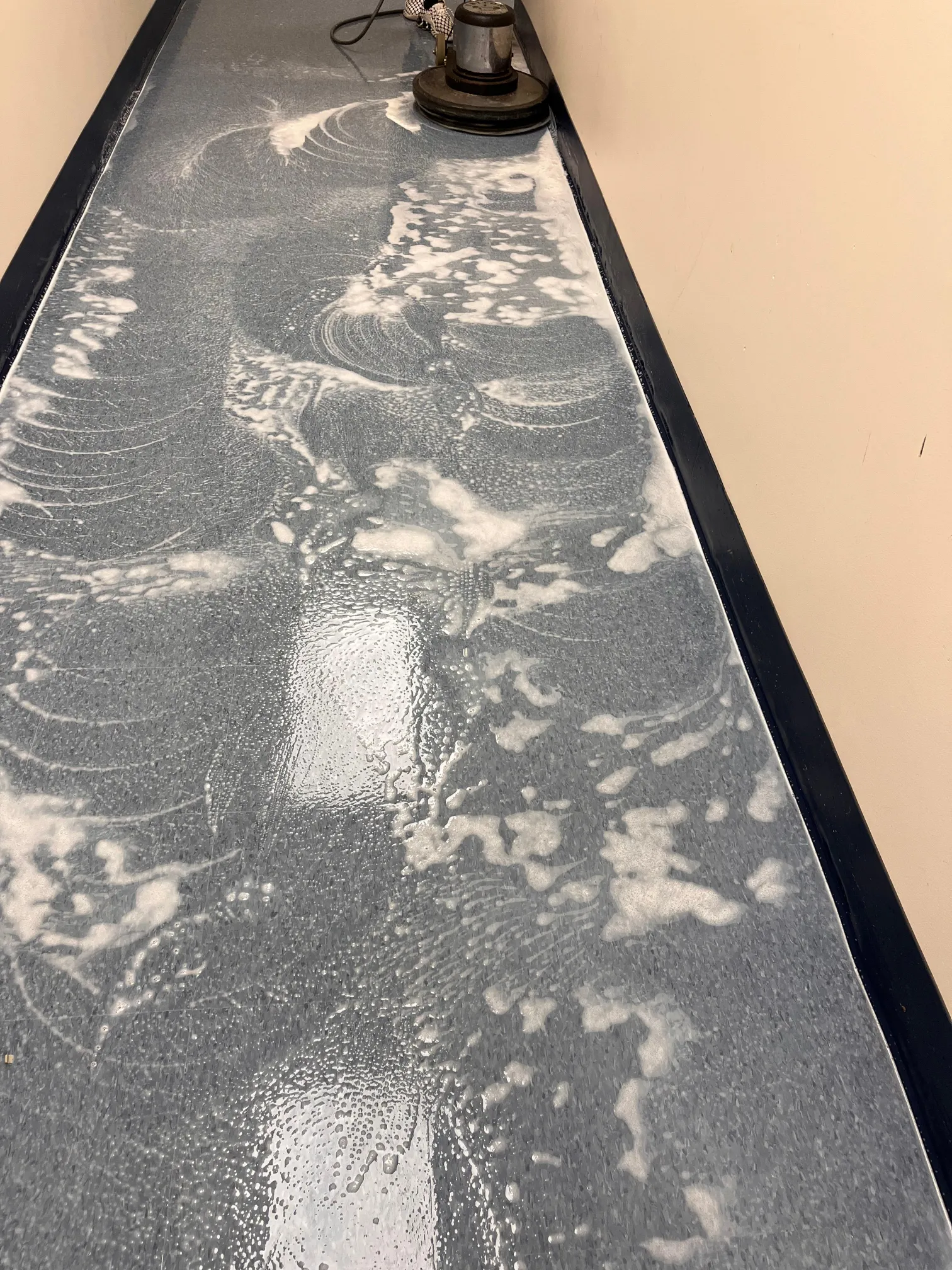
Executing proper vct maintenance wetumpka al means identifying these chemical failures before a single machine is unloaded from our trucks. We measure the depth of the polymer buildup, inspect the structural integrity of the mastic adhesive beneath the VCT to ensure hydrostatic pressure has not caused the tiles to bubble, and select a highly targeted stripping solvent calibrated to cut through the exact number of accumulated, dead wax layers on your floor.
The Mechanics of Heavy-Duty Floor Stripping and Waxing
To restore a commercially degraded floor, you cannot cut corners during the extraction phase. Floor stripping and waxing wetumpka operations demand absolute mechanical control to ensure the substrate is perfectly raw and chemically neutral before we apply our foundation coats.
Step 1: Deep Particulate Sweeping and Isolation Tape
Before liquids are introduced to the environment, we execute a massive dry-sweep protocol. We pull all heavy aggregate, metal shavings, and paper debris off the floor. We then meticulously mask off metal transition strips, baseboards, and any built-in wooden cabinetry using heavy-duty moisture barrier tape. Our stripping solvents are industrial grade; if they splash onto unprotected drywall or sensitive retail fixtures, they will instantly dissolve the paint and bleach the wood.
Step 2: Measured Solvent Emulsification
We flood the target grid with a high-concentration stripping solution. We do not spray this on with a hand-pump; we deploy specialized applicator carts to lay down a thick, heavy coat of solvent. The chemical must dwell for exactly ten to fifteen minutes. During this critical window, the stripper breaks the hard zinc-crosslinked bonds of the old acrylic finish. We manually agitate the solution around the baseboards and under retail shelving where the wax buildup is traditionally the thickest, ensuring the chemical penetrates all the way down to the bare tile without drying out.
Step 3: High-RPM Rotary Agitation
Once the crust is fully emulsified, we hit the floor with heavy-weighted swing buffers equipped with aggressive black stripping pads. The brute downward pressure rips the liquefied wax out of the deep gouges and scratches caused by heavy rolling loads. We systematically scrub every square inch of the grid, ensuring absolutely zero old wax remains trapped in the low spots of the tile.
Step 4: Slurry Recovery and Strict Acidic Neutralization
The resulting slurry is a highly toxic, slippery hazard. We rapidly pull it off the substrate using high-CFM wet vacuums. We never allow stripped wax to begin re-drying onto the bare tile, as this will lock the dirt permanently into the pores of the floor. Immediately following extraction, we flood the bare tile with a concentrated acidic neutralizer. We scrub this acidic rinse deep into the VCT to draw out the high alkaline residues left by the stripper. We extract the rinse and test the surface to guarantee a dead neutral pH of 7.0. This is the only way to ensure the new polymers will cross-link and adhere perfectly to the floor.
Curing High-Solids Polymers in Elmore County Facilities
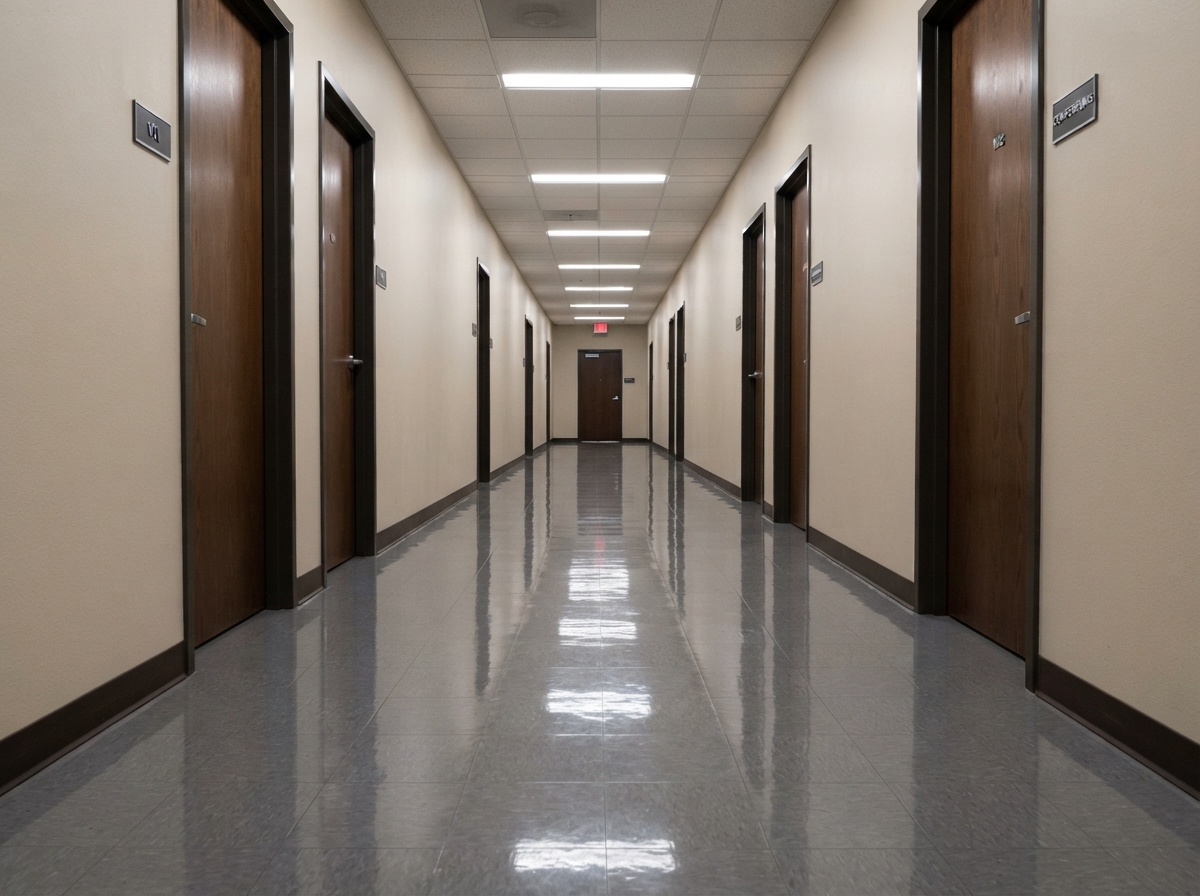
When managing elmore county commercial floor waxing projects, manipulating the ambient environment is just as critical as the chemistry itself. Wetumpka’s extreme summer humidity severely complicates the curing times of commercial floor finishes.
If a contractor lays down thick coats of finish in a humid, stagnant civic facility without proper HVAC cross-ventilation, the top layer of the wax will flash dry while the moisture remains trapped underneath. This creates a soft, gummy wear layer that will never fully harden. Within days, the floor will haze over and begin to scuff heavily under normal foot traffic.
To prevent this, Montgomery Floor Strip and Wax utilizes ultra-high-solids floor finishes and applies them in strict, micro-thin layers using specialized microfiber applicator rigs. We coordinate with your facility managers to lower the building's internal temperature and maximize HVAC air turnover during the overnight application process. By forcing high ambient airflow across thin layers of finish, we calculate exact flash times, guaranteeing that each pass fully cross-links and hardens before the next coat is applied. We lay down four to six foundation coats, building a dense, impenetrable barrier that fully protects the physical VCT from heavy mechanical friction.
High-Speed Thermal Curing and Commercial Tile Buffing
Executing a massive, full-scale strip and wax operation is highly disruptive and expensive. The smartest operational strategy for Wetumpka facility managers is to protect the foundation coats through aggressive, scheduled routine maintenance. Once your floor has a solid, cured wear layer, we transition your facility to a high-speed thermal burnishing protocol.
Commercial tile buffing wetumpka is vastly different from running a standard low-speed floor machine. True burnishing utilizes heavy, propane or battery-powered machines that operate at excess of 2000 RPM. We equip these machines with specialized natural hair or poly-blend thermal pads. The intense downward pressure and extreme friction generated by the high-speed rotation physically melts the top microscopic layer of the floor finish.
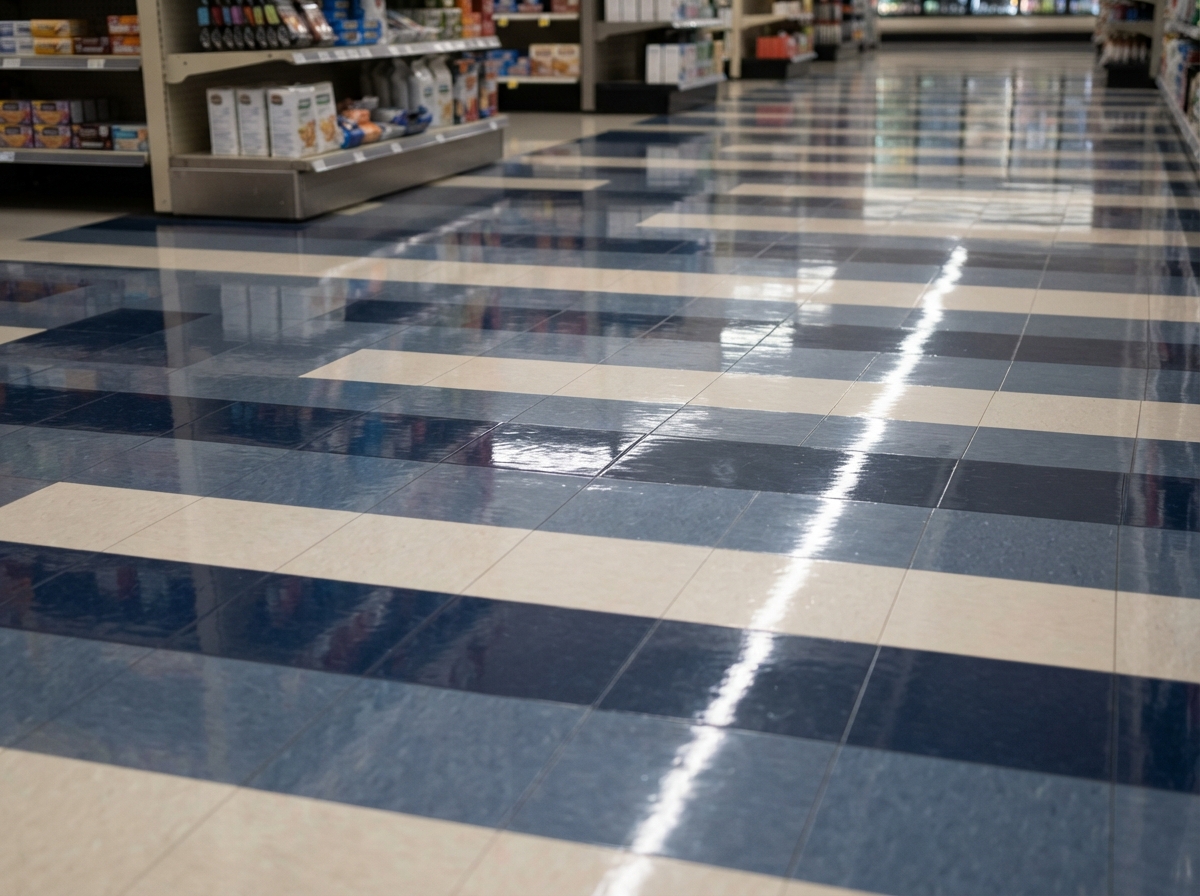
As this micro-layer melts and instantly cools, it fuses into a diamond-hard, glass-like shield. This thermal curing process smooths out microscopic scratches caused by daily foot traffic, drastically hardens the surface against black rubber tire marks, and produces a brilliant, wet-look shine that amplifies overhead lighting in retail corridors. By implementing a monthly or quarterly top-scrub and burnishing program, we continuously renew the top layer of your floor without ever having to strip the thick foundation coats underneath. This extends the lifespan of your substrate by decades and drastically reduces your annual maintenance expenditures.
Secure Your Wetumpka Facility Floor Assessment
Neglected floors do not fix themselves; they actively degrade until total substrate replacement becomes the only remaining option. Do not let abrasive dirt and improper chemical applications destroy the physical tile in your municipal buildings or retail showrooms. You need a targeted, heavy-duty mechanical extraction protocol that completely resets your floors to factory standards.
Montgomery Floor Strip and Wax operates across Elmore County, delivering uncompromising, highly technical floor restorations for complex commercial environments. We will dispatch our field technicians to your Wetumpka facility, measure the extent of your substrate damage, and build a localized extraction and maintenance plan that locks out moisture and completely rejects heavy rolling abrasion.
Establish an immediate phone connection to (334) 530-5637 to speak directly with our team, or submit your facility details through our digital quote inquiry for Wetumpka & Elmore County commercial spaces to schedule a rapid on-site assessment.
Request a Wetumpka & Elmore County Quote
Fill out the form below to receive a custom commercial floor care walkthrough and proposal.
Request an On-Site Floor Estimate
Fast, direct pricing for facilities across Montgomery and the River Region.