
Commercial Resilient Floor Care Montgomery
Specialized pH-neutral linoleum extraction, LVT sealing, and sheet vinyl restoration engineered to prevent alkaline burn, saponification, and seam delamination.
Safe chemical extraction stops linoleum saponification.
Customized polymer sealants protect factory wear layers.
Controlled extraction prevents adhesive water soaking.
Authentic linoleum turning a brittle, sickly yellow in your facility is rarely a sign of old age. More often than not, it is the direct result of alkaline burn. When maintenance crews treat natural linoleum—which is manufactured from linseed oil, pine rosin, and wood flour—like standard synthetic vinyl, they attack it with high-pH stripping chemicals. This rapidly leaches the natural oils from the substrate, causes irreversible bleaching, and forces the material to shrink, curl at the seams, and crack under heavy foot traffic.
In commercial environments across Montgomery, from historic downtown institutions to high-traffic River Region clinics, understanding the exact material science of your flooring is the only way to prevent catastrophic substrate failure. Montgomery Floor Strip and Wax provides specialized commercial resilient floor care designed specifically to address the unique chemical and mechanical requirements of linoleum, luxury vinyl tile (LVT), and sheet vinyl. We do not guess. We diagnose the material, measure the existing finish buildup, and deploy precise, pH-neutral extraction protocols to recover the wear layer without degrading the floor itself.
The Saponification Risk
Standard strippers (pH 12–14) chemically transform natural linseed binders into soap. Natural linoleum must only be treated with specialized neutral chemistry.
Diagnosing Substrate Failure in Commercial Resilient Flooring
Before a single rotary machine touches your floor, we conduct a specialized substrate assessment. Resilient flooring covers a broad spectrum of materials, and misidentifying them leads to expensive damage.
Commercial linoleum stripping and waxing requires a completely different chemical approach than standard VCT maintenance. Standard strippers often have a pH of 12 to 14. Applying these highly caustic solutions to linoleum causes the linseed oil base to saponify—essentially turning the floor's binding agents into soap. The floor becomes porous, permanently discolored, and immediately vulnerable to moisture intrusion.
LVT and sheet vinyl, while synthetic and more resistant to alkaline shock, suffer from different mechanical vulnerabilities. Over-wetting a sheet vinyl floor during the stripping process can force slurry under compromised heat-welded seams. Once moisture attacks the adhesive beneath the vinyl, the hydrostatic pressure causes bubbling and delamination from the concrete subfloor.
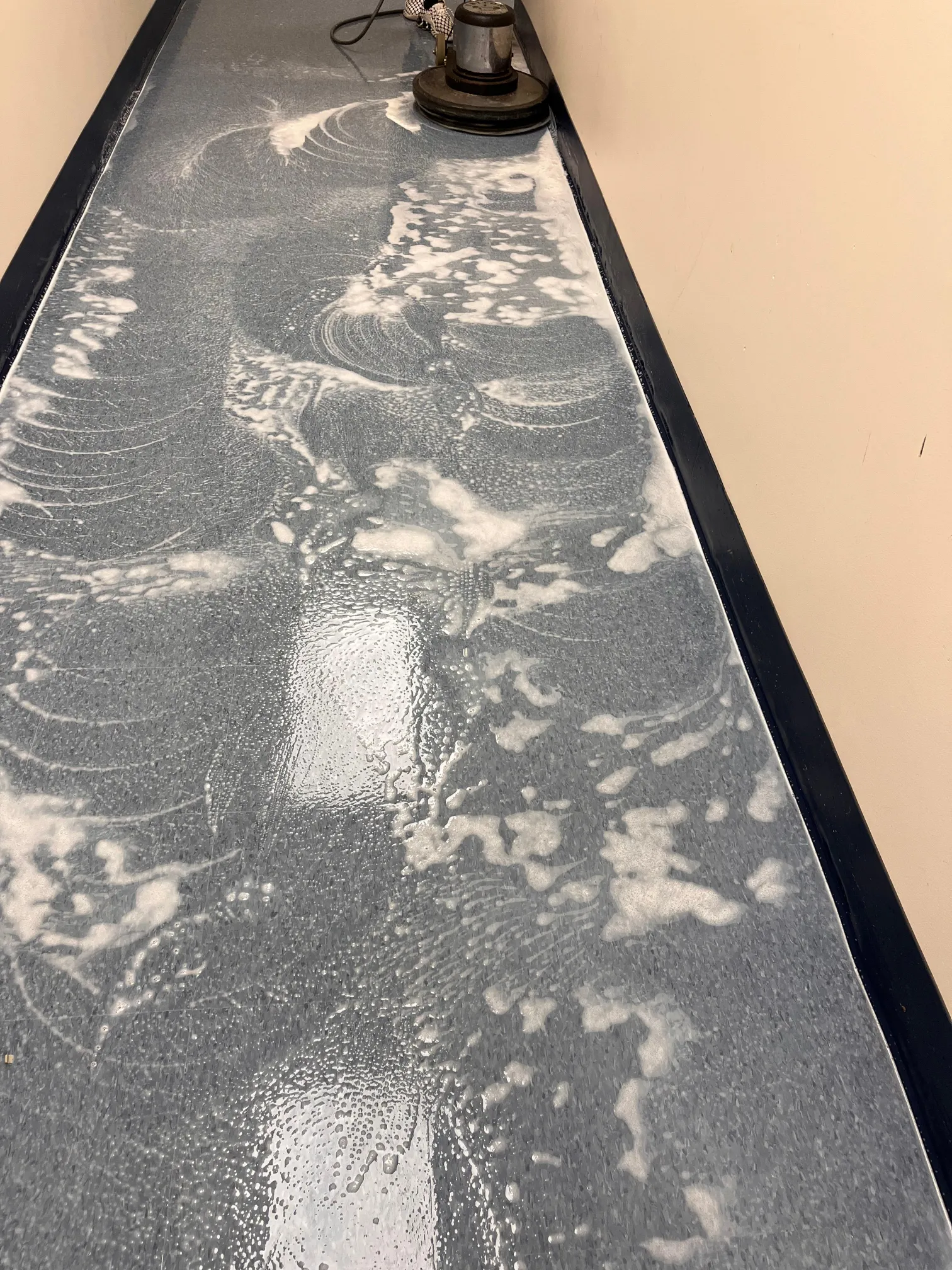
We look for specific symptoms of failure during our initial inspection:
Plasticizer Migration
Often seen in LVT floor cleaning and sealing projects where the vinyl becomes sticky or discolored due to chemical reactions with improper rubber-backed walk-off mats or incompatible sealers.
Finish Peeling and Flaking
Indicates that the previous contractor applied acrylic finish over a floor that was not properly neutralized. If the floor is left alkaline after stripping, the new wax cannot cross-link and bond to the surface.
Seam Separation
Common in older sheet vinyl installations where aggressive scrubbing pads have ground away the protective wear layer and physically snagged the welded joints.
The Impact of Alabama's Climate on Floor Finishes
Montgomery’s climate severely complicates resilient floor maintenance. With extreme summer humidity pushing upward of 80% and significant temperature swings throughout the year, the curing process for acrylic floor finishes requires exact environmental controls.
When we lay down fresh finish on commercial vinyl floor restoration projects in Prattville or Wetumpka, the moisture content in the air directly impacts the evaporation rate of the carrying agents in the wax. If a contractor applies thick coats of finish in high-humidity conditions without proper HVAC cross-ventilation, the surface of the wax dries while the layers beneath remain soft. This "skinning over" traps moisture inside the polymer matrix. Within weeks, the floor develops a hazy, cloudy appearance and begins to scratch easily under minimal traffic.
In facilities across the Auburn-Opelika Corridor, we combat this by manipulating our application techniques. We utilize low-solids, high-durability finishes applied in micro-thin layers. We physically measure ambient humidity and floor temperature to calculate exact flash times between coats. This ensures the polymers fully cross-link and harden, creating a dense, impenetrable barrier against scuffs, chemical spills, and heavy rolling loads.
Humidity & Flash Curing
When ambient humidity exceeds 70%, surface skinning traps water inside the acrylic emulsion. We utilize ambient hygrometers and precision air movement to guarantee full through-cure across all layers.
Our Ph-Neutral Stripping and Waxing Workflow
To protect the structural integrity of your resilient floors, Montgomery Floor Strip and Wax utilizes a strict, mechanically intensive workflow. We prioritize agitation over harsh chemistry, ensuring the old finish is removed cleanly without exposing the substrate to aggressive alkaline shocks.
Step 1: Dry Soil Removal and Tape-Off
Sand and grit are the enemies of the stripping process. We begin by thoroughly sweeping and dust-mopping the entire area to remove particulate matter. Baseboards, metal thresholds, and adjacent carpeted areas are masked off using heavy-duty moisture-resistant tape to prevent chemical splash-over and damage.
Step 2: Controlled Emulsification
For authentic linoleum, we apply a specially formulated, pH-neutral stripping solution. This chemical breaks the acrylic bonds of the old wax without attacking the natural resins of the floor. We apply the solution using designated mop heads, carefully controlling the dwell time. In sheet vinyl floor refinishing, we ensure the solution never puddles near seams or drains where it could bypass the wear layer and attack the adhesive.
Step 3: Mechanical Agitation
We utilize heavy-duty, low-RPM rotary scrubbers fitted with material-specific pads. For delicate linoleum, we step down from aggressive black stripping pads to softer blue or green scrubbing pads. This provides enough friction to lift the emulsified wax and embedded dirt without scoring the soft surface of the flooring.
Step 4: Slurry Extraction and Edge Detailing
The resulting slurry is immediately pulled from the floor using high-CFM wet vacuums. Leaving liquefied wax on the floor for even a few extra minutes allows it to begin re-drying into the pores of the material. Our technicians simultaneously work the perimeters and corners by hand, using specialized edging tools to scrape away stubborn buildup where the rotary machines cannot reach.
Step 5: Acidic Neutralization and Rinsing
This is the most critical phase for long-term finish adhesion. We flood the floor with a weak acidic neutralizing rinse to bring the surface pH back to a dead neutral 7.0. This step halts any remaining chemical reactions. The floor is extracted a second time and damp-mopped with clean water.
Step 6: Targeted Sealing and Finishing
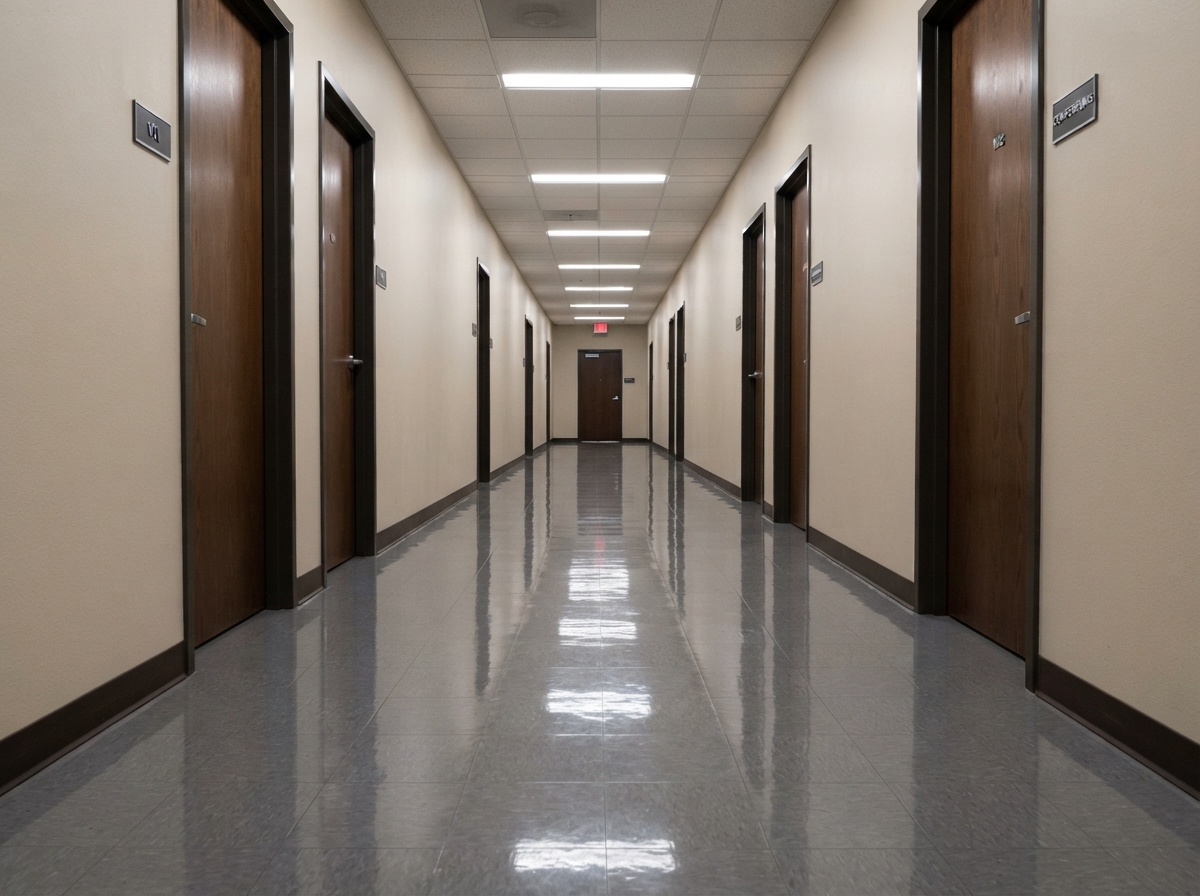
Once the floor is bone dry, we apply a penetrating sealer designed specifically for resilient substrates. Linoleum requires a specialized, breathable acrylic sealer that prevents the natural material from drying out while providing a foundation for the topcoats. We then build the protective wear layer using high-solids, slip-resistant commercial finishes. Each layer is applied with a microfiber applicator to prevent bubbling and lint contamination, ensuring a perfectly smooth, optically clear reflection.
Targeted Material Recovery for Civic and Medical Facilities
Different commercial sectors demand different performance characteristics from their flooring. Montgomery civic buildings require finishes that can withstand thousands of daily footfalls and resist the scratching caused by tracked-in street grit. River Region clinics demand strict adherence to infection control standards; their resilient floors must be perfectly sealed so that biohazards and harsh disinfectants cannot penetrate the surface.
In medical settings in Hope Hull and Pike Road, LVT floor cleaning and sealing focuses heavily on maintaining the factory wear layer. Many modern LVT floors feature polyurethane or UV-cured aluminum oxide coatings. Applying traditional stripping chemicals to these factory finishes will permanently destroy them. Instead, we utilize deep-scrub and top-coat methodologies. We use specialized scrubbers with cylindrical brushes to lift embedded soil from the artificial wood or stone textures of the LVT, followed by the application of a compatible, bonding matte finish that restores protection without altering the aesthetic of the tile.
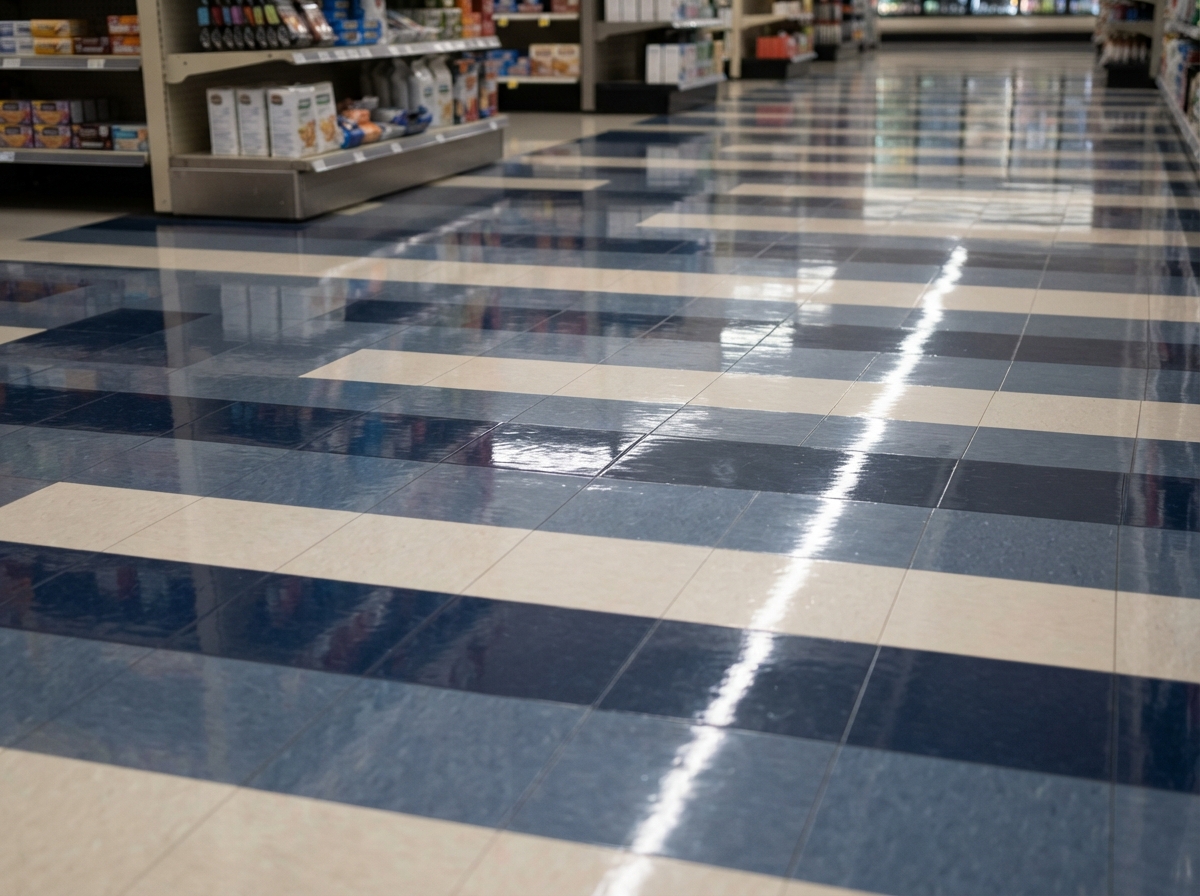
For older civic buildings in Lowndes County, Tallassee, and Millbrook, heavy buildup of floor finish over decades often obscures the original color and pattern of sheet vinyl and linoleum. Our commercial linoleum stripping and waxing services safely cut through ten to fifteen layers of old, yellowed wax, extracting the dirt trapped between the coats. The result is a total aesthetic reset, returning the floor to its original factory appearance while re-establishing a durable, maintainable protective barrier.
Schedule Your On-Site Material Inspection
Guessing at the composition of your commercial flooring leads to permanent damage, voided warranties, and expensive replacements. Before you allow maintenance crews to apply harsh alkaline strippers to your facilities, you need a professional diagnostic evaluation of your current substrate and finish condition.
We will inspect the floor for existing alkaline burn, moisture intrusion, and seam integrity. We will identify the specific material—whether natural linoleum, LVT, or sheet vinyl—and build a precise, chemically appropriate extraction and finishing protocol designed to maximize the lifespan of the installation.
Contact Montgomery Floor Strip and Wax today to secure a specialized substrate assessment and on-site material inspection. Call (334) 530-5637 to speak directly with our team and schedule your evaluation.
Direct Material Consultation
Speak with our resilient floor chemist and lead restoration technician.
Resilient Floor Inspection Request
Submit your facility type and resilient substrate details for a specialized on-site material evaluation.