
Floor Stripping and Waxing Prattville AL
When acrylic floor finish is applied in a humid environment without strict HVAC control, the top layer flashes dry while the underlying layers remain wet. In Downtown Prattville historic commercial properties, where older HVAC systems struggle against the ambient moisture rolling off the nearby Alabama River, this "skinning over" effect causes the wax to cure incredibly soft. Within a matter of weeks, heavy foot traffic grinds dirt straight through the hazy, uncured finish directly into the bare vinyl composition tile (VCT). This permanently stains the physical substrate and opens the door for localized moisture intrusion that will eventually dissolve the tile's adhesive backing.
Floor stripping and waxing prattville al is a mechanical rescue operation designed to reverse failing substrates. Along the Cobbs Ford Road retail strip, commercial facilities absorb massive volumes of abrasive parking lot grit, vehicle oils, and heavy rolling loads from pallet jacks. Standard janitorial floor care prattville relies heavily on dirty string mops and low-alkaline daily cleaners. These methods simply spread abrasive slurry across the floor, driving it deeper into the compromised wax.
Montgomery Floor Strip and Wax does not mop over dirt. We deploy industrial extraction protocols to physically tear the degraded, yellowed acrylic crust off your floors, reset the chemical pH of the substrate, and build an impenetrable wear layer engineered specifically to survive high-volume Autauga County commercial floor maintenance environments.
Prattville Commercial Floor Specs
- High-alkaline zinc-crosslinked polymer stripping chemistry
- Zero-mop residue via high-CFM extraction vacs
- 2000+ RPM thermal burnishing for glass-like optical clarity
- Off-hours overnight & weekend commercial scheduling
The Mechanics of Prattville VCT Strip and Wax Operations
The most common point of failure in commercial floor care prattville is the dreaded "re-coat over dirt." Often, inexperienced janitorial crews attempt to restore a scratched, dull floor by simply mopping a new layer of acrylic finish directly over the existing, contaminated wax. They trap hair, paper clips, embedded sand, and ground-in dirt permanently between the polymer layers. Over several years, this creates a thick, unstable, heavily yellowed crust that fractures easily under the weight of filing cabinets, retail displays, and rolling carts.
Furthermore, this improper application leads to severe edge buildup. Floor buffers physically cannot reach the sharp 90-degree angles where the floor meets the baseboards. When maintenance crews slop new wax into these perimeters without stripping the old wax first, it creates a thick, dark brown ring around the entire facility.
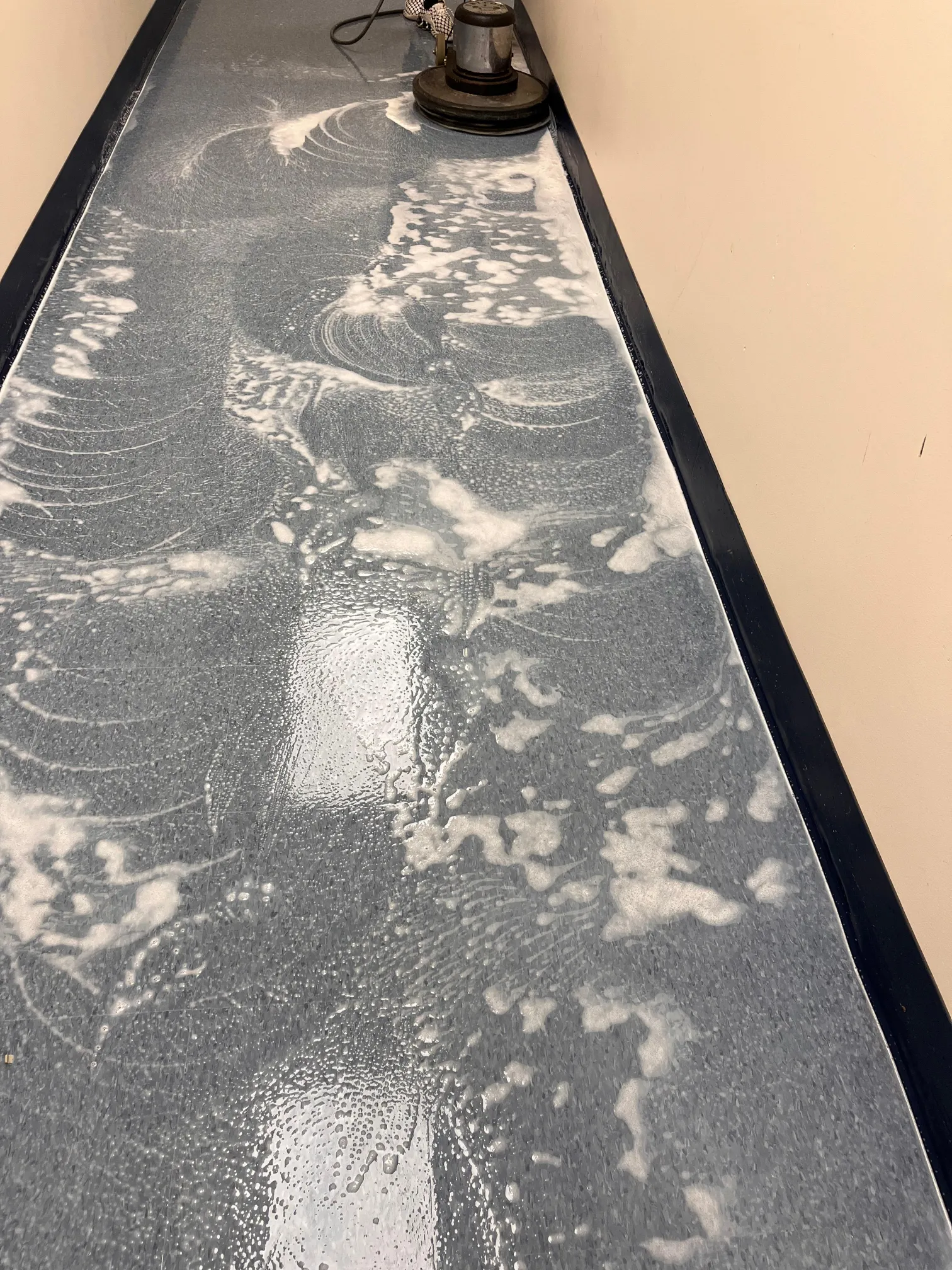
Proper Prattville VCT strip and wax requires exact chemical emulsification and aggressive mechanical agitation. We measure the depth of the polymer buildup and apply high-alkaline stripping solvents engineered specifically to break the hard zinc-crosslinked bonds of the old finish. The solvent must dwell on the floor just long enough to liquefy the heavy acrylic crust without seeping under the VCT and attacking the mastic adhesive holding the tile to the concrete subfloor. If a contractor over-wets a VCT installation, the resulting hydrostatic pressure will cause the tiles to bubble, warp, and permanently detach.
Our Phased Chemical Extraction Workflow
Executing a massive strip and wax operation within an active commercial building requires absolute logistical control. We navigate complex retail grids, protect sensitive data cabling drops in office environments, and shield expensive fixtures from caustic chemical splatter.
Step 1: Dry Particulate Removal and Masking
Before any liquids are mixed or introduced to the floor, we execute a complete dry sweep and dust-mop of the designated grid. We pull heavy sand, metal shavings, and paper debris off the surface. Built-in cabinetry, metal transition strips, and wood veneer baseboards are meticulously sealed with heavy-duty moisture barrier tape. Floor strippers are aggressive chemical agents; if a single drop splashes onto a painted wall or wooden fixture, it will permanently bleach or strip the material.
Step 2: Controlled Alkaline Emulsification
We deploy our chemical stripping solution using highly controlled applicator rigs. In tight corridors along the Highway 14 business district, we manually pull the stripping solvent away from the baseboards to prevent pooling. We monitor the chemical reaction closely by the stopwatch, ensuring the hardened acrylic fully emulsifies into a liquid state without flashing off and drying out prematurely.
Step 3: Mechanical Rotary Scrubbing
Once the old finish is liquefied, we utilize heavy-weighted swing buffers equipped with aggressive black stripping pads. The brute downward pressure rips the emulsified slurry out of the deep gouges in the VCT. For tight corners, under retail gondolas, and along the heavily built-up perimeters, our technicians use specialized hand-scraping tools to manually cut the old wax away from the edges where the swing machines cannot reach.
Step 4: Slurry Extraction and Exact pH Neutralization
The toxic, slippery slurry is rapidly pulled off the substrate using high-CFM wet vacuums. We never allow stripped wax to begin re-drying onto the bare tile, as this permanently locks the dirt back into the pores of the floor. Following extraction, we immediately flood the floor with a concentrated acidic neutralizer. Standard floor strippers leave the floor in a highly alkaline state (often reaching a pH of 13 or 14). If a new floor finish is applied directly over an alkaline surface, the chemical bonds will instantly fracture, causing the new wax to powder and fail within days. We scrub the acidic rinse deep into the pores of the VCT, extracting it entirely to guarantee a dead neutral pH of 7.0.
Step 5: Multi-Coat High-Solids Application
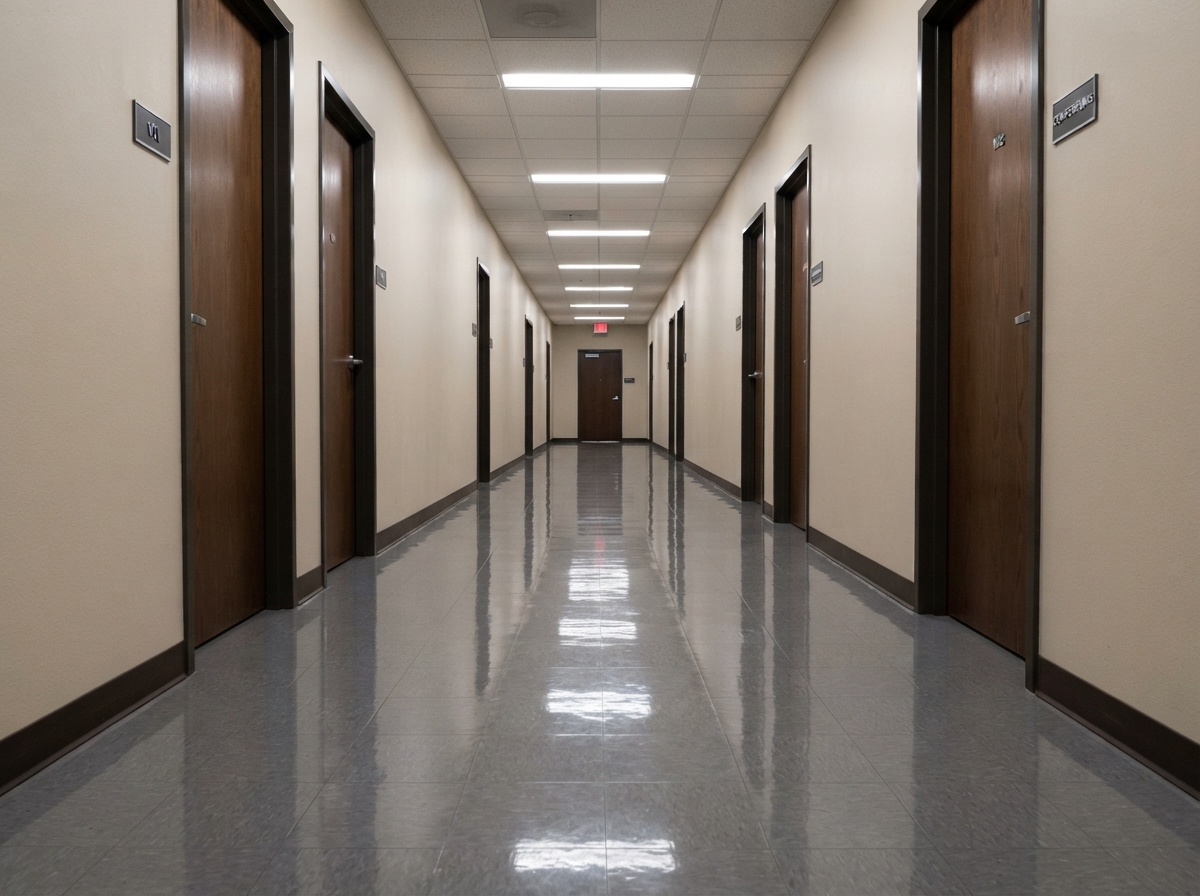
With the substrate chemically neutralized and bone dry, we apply four to six foundation coats of commercial-grade, high-solids finish. We utilize specialized microfiber applicator pads to guarantee exact mil-thickness per coat, completely eliminating the risk of mop streaks and lint contamination. We calculate exact flash times between each pass based on the internal HVAC temperature of your building, forcing the polymers to fully cross-link and harden.
Thermal Curing and High-Speed Burnishing Mechanics
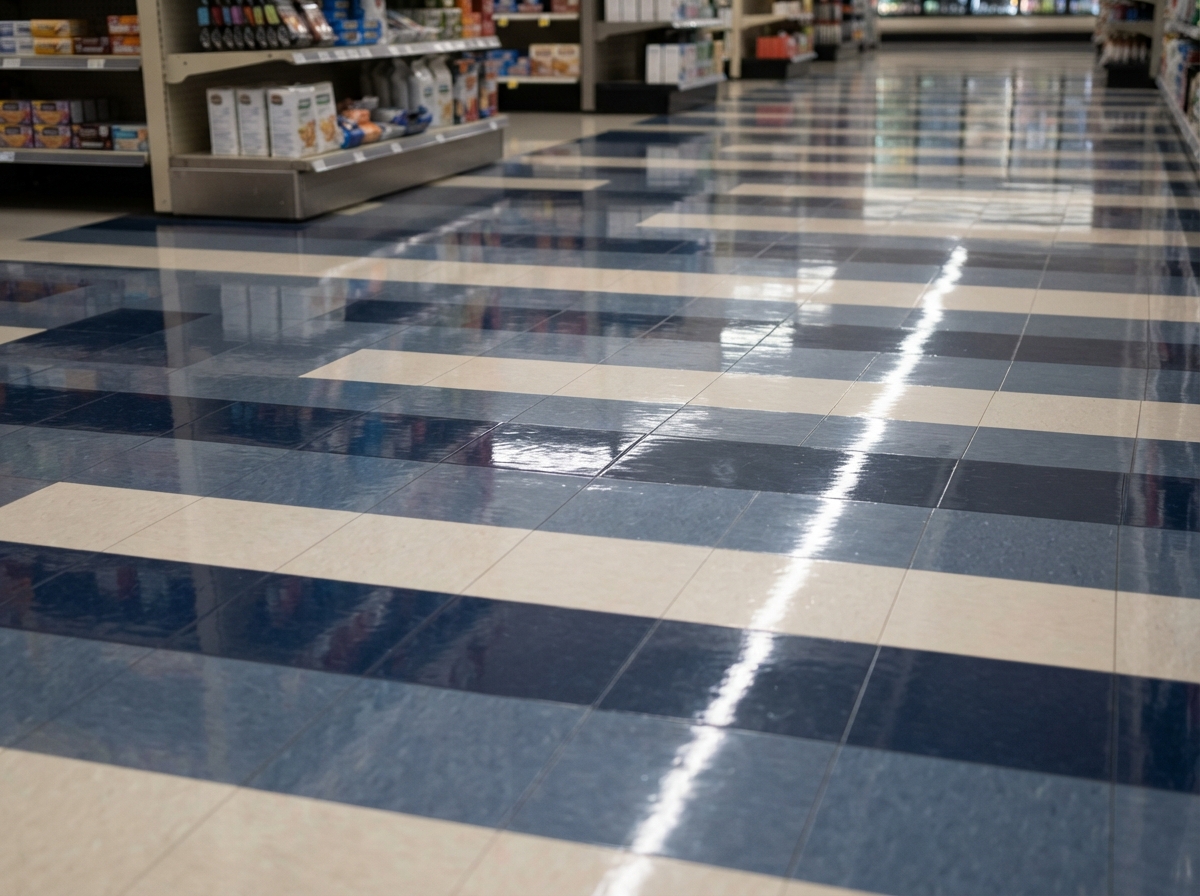
In the high-end retail locations operating out of the High Point Town Center, the floor finish must achieve two critical, simultaneous objectives: it must handle the massive shear force of thousands of shopping carts, and it must reflect the overhead lighting with absolute optical clarity to showcase the inventory.
Meeting these retail presentation standards demands an entirely different tier of polymer application and maintenance. In modern glass-front structures, natural daylight severely exposes floor defects. A poorly waxed floor will immediately show application streaks, dirt trapped in the foundation coats, and hazy moisture under direct sunlight.
To combat this, we utilize ultra-high-solids zinc-crosslinked finishes that dry optically clear. Once the foundation coats are laid and fully cured, we initiate our high-speed thermal burnishing protocol. Running a propane or battery-powered burnisher at 2000+ RPM over the cured finish physically melts the microscopic top layer of the wax, fusing it into a diamond-hard, glass-like shield. This thermal curing process smooths out microscopic scratches, dramatically amplifies the overhead lighting, and provides the pristine, wet-look shine required for high-end retail presentation.
Protecting Historic Substrates in Downtown Prattville
Downtown Prattville historic commercial properties present unique challenges that standard janitorial floor care prattville simply cannot solve. Older buildings often sit on original concrete slabs poured decades before modern vapor barriers were mandated by building codes. These slabs act like hard sponges, pulling moisture from the ground through capillary action. This is known as Moisture Vapor Transmission (MVT).
If an inexperienced contractor seals a high-moisture slab or older VCT installation with a dense, non-breathable acrylic wax, the moisture rising from the earth becomes trapped directly beneath the finish. The resulting hydrostatic pressure literally blows the wax off the floor in large, peeling sheets—a failure known as delamination.
Before we lay a single coat of finish in these historic properties, we assess the localized MVT rate. If we detect high substrate moisture, we deploy breathable polymer finishes designed to allow vapor to pass through the wear layer without compromising the structural integrity of the wax. This localized, technically sound approach prevents catastrophic finish failure and preserves the historic flooring assets for decades.
Schedule Your Prattville Site Assessment
Reacting to floor failure is exponentially more expensive than actively preventing it. If you wait until the protective wear layer is completely destroyed and your physical VCT tile is deeply gouged by embedded grit, you are facing massive capital expenditure for total floor tear-out and replacement.
Montgomery Floor Strip and Wax acts as the primary Autauga County commercial dispatch for technical floor extraction and refinishing operations. We will deploy to your facility, analyze the exact chemical and mechanical condition of your substrate, and construct a precise, localized maintenance plan that extends the physical lifespan of your flooring.
Call (334) 530-5637 immediately to speak directly with our team and schedule an on-site evaluation, or click the Autauga County estimate form button to submit your facility details for a rapid technical assessment.
Request an Autauga County Estimate
Fill out the form below to receive a custom commercial floor care walkthrough and proposal.
Request an On-Site Floor Estimate
Fast, direct pricing for facilities across Montgomery and the River Region.